
Guide · wedding
The wedding music timeline, from the ceremony to the last song
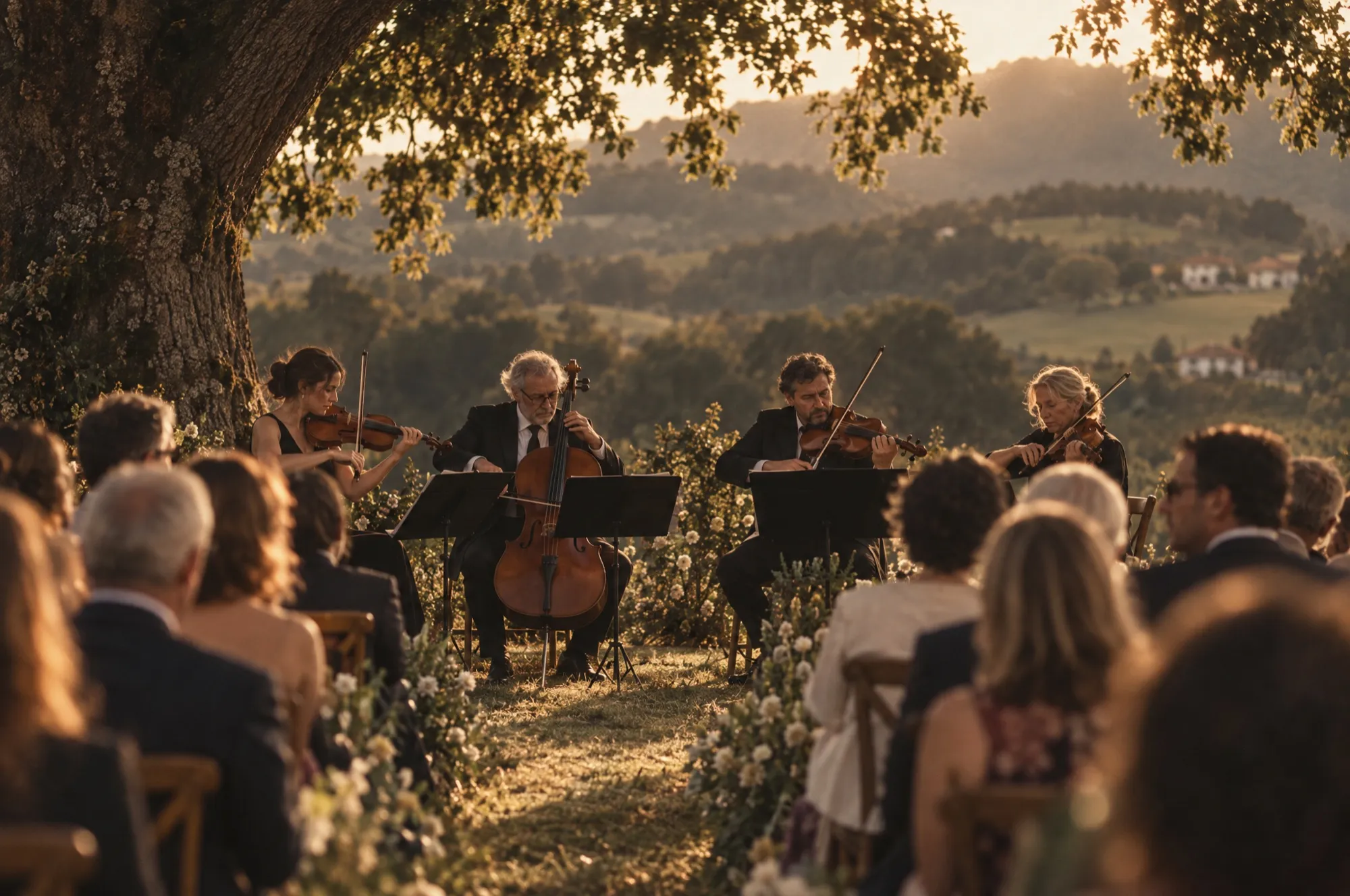
A wedding day is a series of moments that have nothing in common: the emotion of the ceremony, the lightness of the cocktail hour, the warmth of dinner, the explosion of the dancing. Music is the thread that ties them together. Here's what it needs to do, moment by moment.
The ceremony: three key moments
- The entrance: the most anticipated piece of music of the day. Slow, moving, and matched to the length of the walk: we time it.
- During the ceremony: a few musical pauses between the readings, gentle pieces, often played live (strings, voice, piano).
- The exit: a change of energy, something joyful and bright that gets the celebration going.
The cocktail hour: atmosphere without taking over
Guests get together, talk, laugh. The music should be present but never intrusive: a selection of soul, jazz, bossa, acoustic or mellow house, often outdoors. It's the ideal moment for a live musician (saxophone, guitar, vocals) who moves around or plays near the bar.
Dinner: a gentle build
We start softly to leave room for conversation, then gradually build the energy as the courses go by. The speeches and entertainment are planned in advance with the caterer and the wedding party, so that the mic and the music follow on without awkward gaps.
The couple's entrance into the dining room deserves its own song: it's a small event within the event.
The first dance and opening the dancefloor
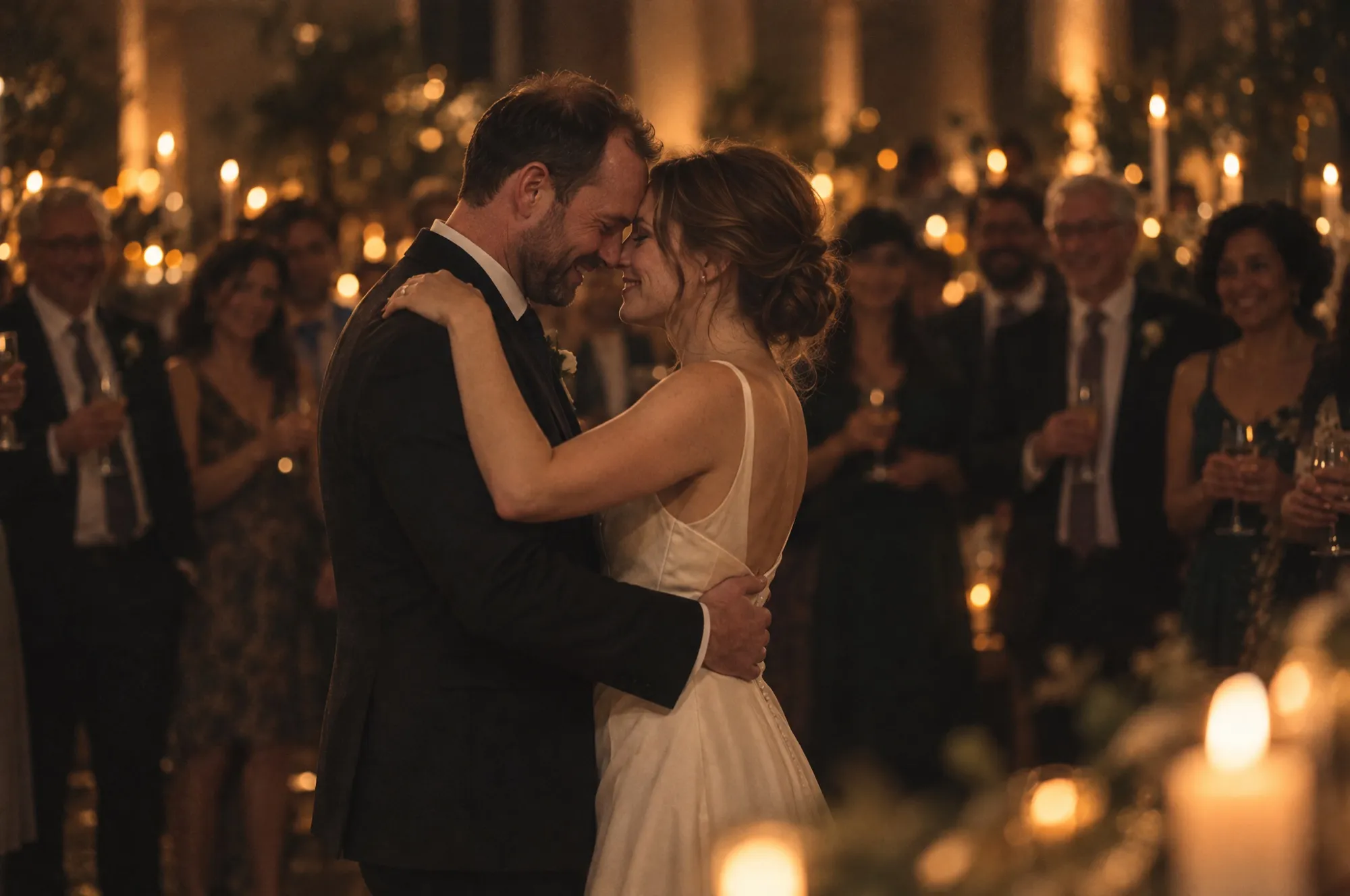
The first dance is a moment suspended in time: your song, dedicated lighting, all eyes on you. The DJ prepares the transition to opening the dancefloor, often with a crowd-pleaser that brings everyone onto the floor within seconds.
The party: waves, not a straight line
A good party comes in waves: crowd-pleasing hits for every generation, more specialist stretches for the dancers, moments to catch your breath. The DJ reads the dancefloor constantly; your must-plays and your do-not-plays act as a compass, not a list to run through.
And the ending matters as much as the beginning: the last song is chosen with care, and it stays in everyone's memory of the night.
A real example: our wedding in the Basque hills, with a ceremony facing the mountains, a cocktail lunch indoors, a sunset dance on the terrace, then a surprise club indoors.
How to prepare
- List your must-plays (a handful is enough) and your do-not-plays.
- Choose the songs for the key moments: entrance, exit, entrance into the dining room, first dance, last song.
- Share the day's timed schedule with your DJ and your caterer.
- Think about the spaces: do the ceremony, cocktail hour and party all take place in the same spot?
That's exactly the musical thread we build with you through artistic direction. To go further: DJ or live band?
Frequently asked questions
How many songs should we choose for our wedding?
Very few: the songs for the key moments (entrance, exit, entrance into the dining room, first dance, last song), a handful of must-plays and your do-not-plays. The rest is the DJ's job, adapting to the dancefloor.
Can we have live music during the ceremony?
Yes, and it's often the most moving part: strings, voice, piano or guitar for the entrance and the pauses between the readings.
Who handles the mic for the speeches?
The DJ: they set up the mic, cut or lower the music at the right moment and lift the atmosphere again right after. The running order is planned in advance with the caterer and the wedding party.
A budget, a date, an idea?
Tell us about your event: we'll come back to you with profiles and a detailed quote.
Further reading
- How much does a wedding DJ cost in the Basque Country?
- DJ or live band for a wedding: how to choose
- How to choose your wedding DJ: the questions to ask
- Basque songs for a wedding: 14 pieces, from the ceremony to the dancing
- Outdoor wedding in the Basque Country: what the music needs to plan for
- Music for corporate events in the Basque Country: the formats that work